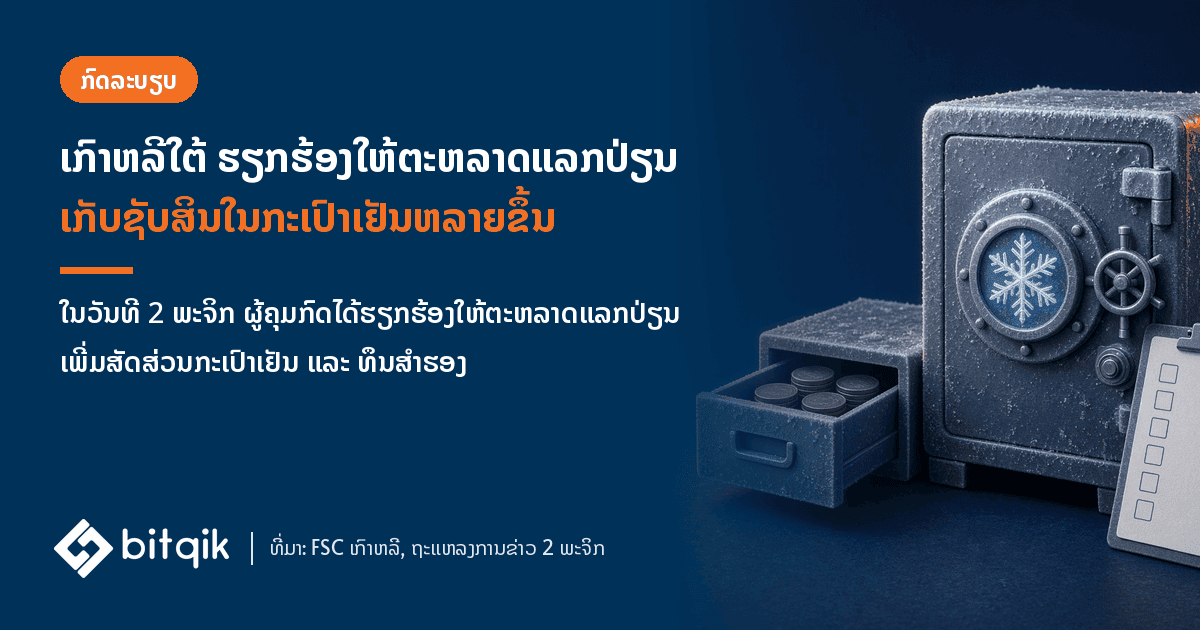
ເກົາຫລີໃຕ້ ຮຽກຮ້ອງໃຫ້ຕະຫລາດແລກປ່ຽນ ເກັບຊັບສິນໃນ Cold Wallets ຫລາຍຂຶ້ນ
ຄະນະກຳມະການບໍລິການການເງິນ (FSC) ຂອງເກົາຫລີໃຕ້ ໄດ້ຈັດກອງປະຊຸມສຸກເສີນໃນວັນຈັນທີ 2 ພະຈິກ ຮ່ວມກັບສຳນັກງານກວດກາການເງິນ (FSS), ສະຖາບັນຄວາມປອດໄພທາງການເງິນ, ສະມາຄົມຕະຫລາດແລກປ່ຽນຊັບສິນດິຈິຕອນ (DAXA) ແລະ ຕະຫລາດແລກປ່ຽນຄຣິບໂຕລາຍໃຫຍ່ ເພື່ອທົບທວນຜົນກະທົບຂອງການແຮັກ Binance ຕໍ່ຕະຫລາດເກົາຫລີ, ອີງຕາມຖະແຫລງການຂ່າວຂອງ FSC. ກອງປະຊຸມເປັນປະທານໂດຍທ່ານ Yoo Young-jun ຫົວໜ້າກົມນະໂຍບາຍການເງິນດິຈິຕອນຂອງ FSC.
FSC ລະບຸວ່າ ກອງປະຊຸມໄດ້ເນັ້ນໃສ່ການຄວບຄຸມການເຂົ້າເຖິງລະບົບໄອທີ, ຂັ້ນຕອນການອະນຸມັດ ແລະ ລົງລາຍເຊັນ ສຳລັບການຖອນອອກຈາກ hot wallet ກະເປົາດິຈິຕອນແບບອອນລາຍ ແລະ ກະເປົາອື່ນໆ, ແລະ ການຄຸ້ມຄອງສິດຂອງຜູ້ດູແລລະບົບ. ເພື່ອປ້ອງກັນເຫດການຄ້າຍຄືກັນ, FSC ໄດ້ຂໍໃຫ້ຕະຫລາດແລກປ່ຽນ ເພີ່ມສັດສ່ວນຊັບສິນທີ່ເກັບໃນກະເປົາເຢັນ (cold wallet) ກະເປົາດິຈິຕອນແບບອອບລາຍ, ຕິດຕາມການຝາກ ແລະ ຖອນຕະຫລອດເວລາ ພ້ອມຈັດຫາພະນັກງານຮັບມືເພີ່ມ, ລາຍງານ ແລະ ແບ່ງປັນຂໍ້ມູນຄວາມພະຍາຍາມເຂົ້າເຖິງທີ່ຜິດປົກກະຕິຢ່າງວ່ອງໄວ, ແລະ ປະຕິບັດມາດຕະການຄວາມປອດໄພທີ່ເຮັດໄດ້ທັນທີ ເຊັ່ນ ການສະສົມທຶນສຳຮອງເພີ່ມ. ຖະແຫລງການຍັງລະບຸວ່າ ກອງປະຊຸມໄດ້ກວດສອບສັດສ່ວນກະເປົາເຢັນ ແລະ ສະຖານະການປະກັນໄພ ແລະ ທຶນສຳຮອງ ຂອງຕະຫລາດແລກປ່ຽນແບບສຸກເສີນ.
ກົດໝາຍເກົາຫລີ ກຳນົດໃຫ້ຕະຫລາດແລກປ່ຽນ ເກັບຄຣິບໂຕຂອງຜູ້ໃຊ້ໃນກະເປົາເຢັນຢ່າງໜ້ອຍ 80% ຢູ່ແລ້ວ, ອີງຕາມ Cointelegraph. ໃນທ້າຍເດືອນກັນຍາ, ສັດສ່ວນກະເປົາເຢັນຂອງ Upbit ຢູ່ທີ່ 99.17%, Bithumb 94.76% ແລະ Coinone 85%, ໃນຂະນະທີ່ Digital X (ຊື່ເກົ່າ Korbit) ແລະ GOPAX ລາຍງານ 82.79% ແລະ 80.54%, ອີງຕາມສື່ທ້ອງຖິ່ນທີ່ອ້າງອີງ FSS, ຜ່ານ Cointelegraph. ແຍກຕ່າງຫາກ, ທະນາຄານແຫ່ງເກົາຫລີ ກຳລັງສຳຫລວດທະນາຄານ 18 ແຫ່ງ ແລະ ບໍລິສັດຫລັກຊັບ 13 ແຫ່ງ ກ່ຽວກັບຄວາມສ່ຽງທີ່ກ່ຽວຂ້ອງກັບຄຣິບໂຕ ເຊິ່ງເປັນການທົບທວນທີ່ເລີ່ມກ່ອນການໂຈມຕີ Binance.
ເງິນຄຣິບໂຕ ບໍ່ແມ່ນເງິນ ແລະ ບໍ່ແມ່ນເຄື່ອງມືຊຳລະທີ່ຖືກຕ້ອງຕາມກົດໝາຍ ຂອງ ສປປ ລາວ (ແຈ້ງການ ທະນາຄານແຫ່ງ ສປປ ລາວ ເລກທີ 156/ຫກ, ລົງວັນທີ 11 ສິງຫາ 2021).
South Korea Urges Exchanges to Hold More in Cold Wallets
South Korea’s Financial Services Commission (FSC) held an emergency meeting on Monday, 2 November, with the Financial Supervisory Service, the Financial Security Institute, the Digital Asset eXchange Alliance (DAXA) and major crypto exchanges to review the impact of the Binance hack on the Korean market, according to an FSC press release. The meeting was chaired by Yoo Young-jun, the FSC’s director general for digital finance policy.
The FSC said it focused on exchanges’ IT access controls, approval and signing procedures for withdrawals from hot wallets and other wallets, and the management of administrator privileges. To prevent a similar breach, it asked exchanges to raise the share of assets held in cold wallets, monitor deposits and withdrawals at all times and secure extra response staff, report and share abnormal access attempts quickly, and take security steps that can be put in place immediately, such as setting aside additional reserves. The release also said the meeting urgently checked exchanges’ cold-wallet ratios and their insurance and reserve status.
Korean law already requires exchanges to keep at least 80% of users’ crypto in cold storage, Cointelegraph reported. At the end of September, Upbit’s cold-wallet ratio was 99.17%, Bithumb’s 94.76% and Coinone’s 85%, while Digital X (formerly Korbit) and GOPAX reported 82.79% and 80.54%, according to local media citing the FSS, via Cointelegraph. Separately, the Bank of Korea is surveying 18 banks and 13 brokerages on their exposure to crypto-related risks, a review that began before the Binance attack.
Cryptocurrency is not money and is not a lawful means of payment in the Lao PDR (Bank of the Lao PDR Notice No. 156/ຫກ, 11 August 2021).
Source: Financial Services Commission (Korea), press release of 2 Nov (Korean) – https://www.fsc.go.kr/no010101/88054
Additional sources:
- Cointelegraph (80% legal minimum; cold-wallet ratios at end-September) – https://cointelegraph.com/news/south-korea-urges-exchanges-to-boost-cold-storage-after-binance-hack
- Bank of the Lao PDR Notice No. 156/ຫກ (disclaimer basis) – https://www.bol.gov.la/fileupload/13-08-2021_1628839332.pdf